

Top Signs Your Water Heater Needs Repair or Replacement in Chicagoland
A water heater failure rarely announces itself with a dramatic bang. Instead it starts as a rumble in the tank, a faint metallic smell in the hot water, or a shower that turns lukewarm halfway through. In Chicagoland, where cold municipal water and long heating seasons put extra strain on tanks, catching these early signals can mean the difference between a same-day repair and an emergency replacement during a January cold spell.
Master Pro Plumber has serviced water heaters throughout Chicagoland long enough to know exactly which symptoms mean call a plumber this week, and which mean get a new unit installed before it fails. Here is how to read the signs correctly.
How Long Should a Water Heater Last in Chicagoland?
Most standard tank water heaters last 8 to 12 years in Chicagoland homes, while tankless units can run 15 to 20 years with regular maintenance. Chicago's moderately hard municipal water, averaging roughly 7 to 9 grains per gallon depending on your neighborhood's source, accelerates sediment buildup inside tanks and shortens that lifespan if the unit is never flushed.
Homes built before the 1980s, common throughout Chicago's brick bungalow and two-flat housing stock, often have water heaters tucked into unheated basements or crowded utility closets. Cooler ambient temperatures make the unit work harder through winter, adding wear that a heater in a conditioned mechanical room would not experience.
Repair or Replace? How to Tell the Difference
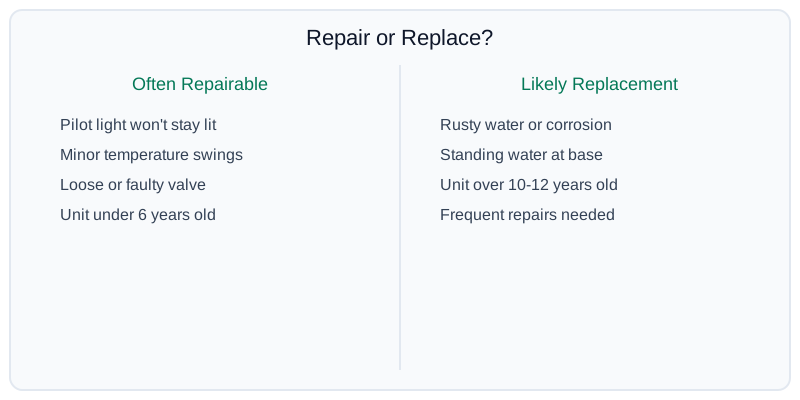
Not every problem means buying a new tank. The age of the unit, the type of failure, and how the issue affects safety all factor into the decision. A five-year-old heater with a broken thermostat is almost always worth repairing, since the part is inexpensive and the tank itself still has years of service left. A twelve-year-old heater with the same broken thermostat is a different story, because you would be spending money on a unit that is already near the end of its expected lifespan.
The clearest dividing line is the tank itself. Electrical components, valves, thermostats, and heating elements can all be replaced. A corroded or leaking tank cannot. Once the steel tank starts to rust through, no repair will stop the eventual failure, and the only responsible move is replacement before it floods a basement or utility room.
Warning Signs Worth Watching For
Beyond age, several specific symptoms tell you something is wrong right now. Each one points to a different underlying issue, and knowing which is which helps you describe the problem accurately when you call for service.
Rusty or discolored water: If hot water runs brown, orange, or metallic-tasting, the tank's internal lining has likely broken down and corrosion is spreading. This is one of the strongest indicators that replacement, not repair, is the right call.
Rumbling, popping, or banging noises: These sounds usually come from sediment hardening at the bottom of the tank, a common issue with Chicago's mineral content. Sediment buildup that severe often means the heating element is being overworked, and while a flush can help, it may be too late to fully reverse the damage.
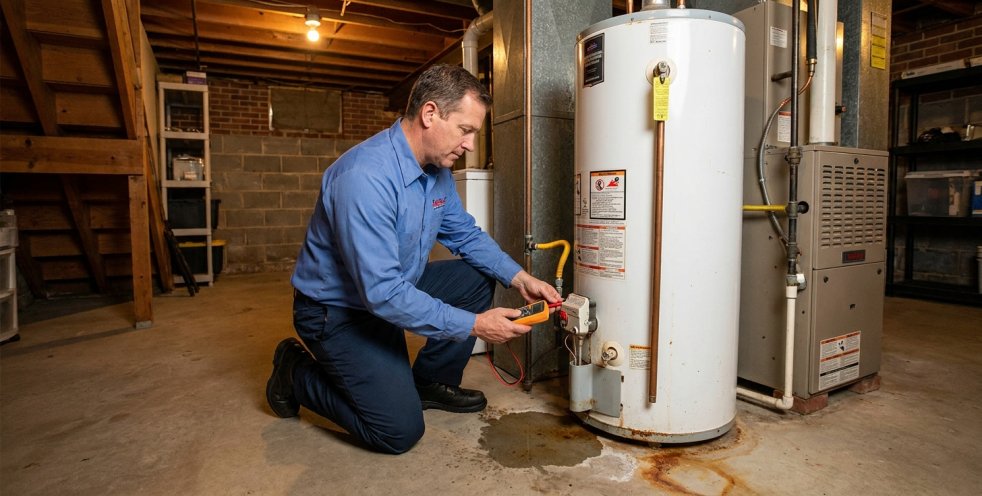
Water pooling around the base: Any moisture at the bottom of the tank is a warning sign, not a maintenance item. It can mean a failed drain valve, which is repairable, or a hairline crack in the tank itself, which is not. Either way, it needs same-week attention before it becomes a flooded utility room.
Inconsistent or lukewarm water: A single cold shower can be a fluke, but repeated temperature swings usually point to a failing heating element, a bad thermostat, or a tank that is too small for current household demand. This is often repairable if caught early.
Rising energy bills without added usage: Sediment buildup and failing insulation both make a water heater run longer to reach the same temperature. If your gas or electric bill climbs and your household habits have not changed, the water heater is a likely culprit.
How Much Does Water Heater Repair or Replacement Cost in Chicagoland?
Water heater repairs in Chicagoland typically run 150 to 600 dollars depending on the part involved, while full replacements generally range from 1,200 to 3,500 dollars installed, with tankless systems running higher due to venting and gas line upgrades. Exact pricing depends on the fuel type, tank size, and whether code updates are needed during installation.
- Minor repairs (thermostat, heating element, pressure relief valve): 150 to 400 dollars
- Drain valve or anode rod replacement: 150 to 350 dollars
- Standard 40 to 50 gallon tank replacement: 1,200 to 2,200 dollars installed
- Tankless water heater installation: 2,800 to 4,500 dollars installed
Chicago and many surrounding municipalities require a licensed plumber and a permit for water heater replacement, along with code-compliant venting and a properly sized temperature and pressure relief valve. Skipping the permit can create problems later, particularly during a home sale inspection.
Why Chicago's Climate and Water Supply Add Extra Strain
Long, cold winters mean Chicagoland water heaters run almost constantly for six or seven months of the year, heating incoming water that can drop into the 30s and 40s straight from the main. That extended workload adds up. A heater that might last 12 years in a milder climate often shows wear closer to the 9 or 10 year mark here.
Basement flooding during heavy spring rains is another regional factor. Older Chicagoland basements are prone to seasonal moisture, and a water heater sitting directly on a concrete floor is vulnerable to corrosion at the base even before the tank itself fails internally. Elevating the unit on a stand or drain pan is a simple step that pays off during Chicago's wet spring stretches.
What Happens If You Wait Too Long
Picture a two-flat in Chicago with a 13-year-old gas water heater in the basement. The owner notices lukewarm showers for a few weeks but keeps putting off a call, figuring it will hold on through winter. One February morning, the tank's corroded seam finally gives way overnight, sending forty gallons of water across the basement floor and soaking stored belongings and drywall. What would have been a planned 1,800 dollar replacement becomes an emergency call, water damage cleanup, and a rushed installation during the coldest week of the year. Reading the early signs and scheduling a replacement on your own timeline almost always costs less than waiting for a failure to force the issue.
What To Do Next
If you're noticing any of the warning signs above, a short checklist keeps the process simple.
- Note the age of your unit, usually stamped on a serial number label near the top of the tank.
- Check for visible rust, moisture, or corrosion around the base and fittings.
- Test the water temperature and color at multiple taps in the home.
- Shut off the water supply to the heater if you see active leaking.
- Call a licensed plumbing contractor for an inspection before the problem worsens.
Master Pro Plumber inspects the tank, the venting, the shutoff valves, and the surrounding plumbing before recommending repair or replacement, so you get an honest answer rather than an automatic upsell.
Call (847) 641-2542 to schedule a water heater inspection or same-day repair anywhere in Chicagoland.
Frequently Asked Questions
Can I repair a water heater myself?
Minor tasks like flushing sediment or replacing an anode rod are within reach for a handy homeowner, but gas connections, electrical wiring, and pressure relief valves involve real safety risks and are best left to a licensed plumber, especially given Chicago's permit requirements for this work.
Should I switch to a tankless water heater?
Tankless units cost more upfront but last longer, take up less space, and provide continuous hot water, which makes them a good fit for larger households or businesses with high demand, though homes with older gas lines may need upgrades to support one.
How often should a water heater be flushed?
Most Chicagoland water heaters benefit from an annual flush to clear sediment caused by the area's moderately hard water, which helps the unit run efficiently and extends its lifespan closer to the upper end of its expected range.