Why Your Sump Pump Should Be Tested Before Storm Season
Spring and summer in Des Plaines bring heavy rainfall, rapid snowmelt, and the kind of ground saturation that pushes water toward your foundation fast. If your sump pump has been sitting idle all winter, there is a real chance it will not perform when you need it most.
Testing your sump pump before storm season is one of the simplest and most important things a homeowner can do to protect their basement. Here is what you need to know.
Why Des Plaines Homeowners Face Higher Flood Risk
Des Plaines sits in the Chicago metropolitan area, where flat terrain and clay-heavy soil limit natural drainage. The Des Plaines River has a long history of flooding, and many neighborhoods throughout the city sit in or near flood-prone zones.
Spring storms here can drop several inches of rain in a short period. When that happens, the soil saturates quickly and groundwater rises fast. A sump pump that is even slightly out of condition can fail under that kind of pressure.
What a Sump Pump Actually Does
A sump pump sits in a pit (called a sump basin) at the lowest point of your basement or crawl space. As groundwater collects in the pit, a float switch triggers the pump to activate and push that water away from your foundation through a discharge line.
The system is straightforward, but it relies on several components working correctly at the same time. Any one failure point can result in a flooded basement.
Warning Signs Your Sump Pump May Be Failing
Do not wait for standing water to find out something is wrong. Watch for these signs in the weeks before storm season arrives.
- The pump runs constantly or cycles on and off rapidly without heavy rain
- You hear grinding, rattling, or loud humming during operation
- The motor runs but no water is being discharged
- The pump does not turn on at all when you test it manually
- There is visible rust, corrosion, or debris buildup in the sump pit
- The discharge pipe is cracked, disconnected, or draining too close to the foundation
- The pump is more than 7 to 10 years old and has never been serviced
Any one of these issues deserves attention before the first major storm rolls through.
How to Test Your Sump Pump at Home
A basic sump pump test takes about five minutes and requires no special tools. Here is how to do it.
- Locate the sump pit, usually in a corner of the basement, and remove the cover if there is one.
- Check that the pump is upright and the float switch can move freely without obstruction.
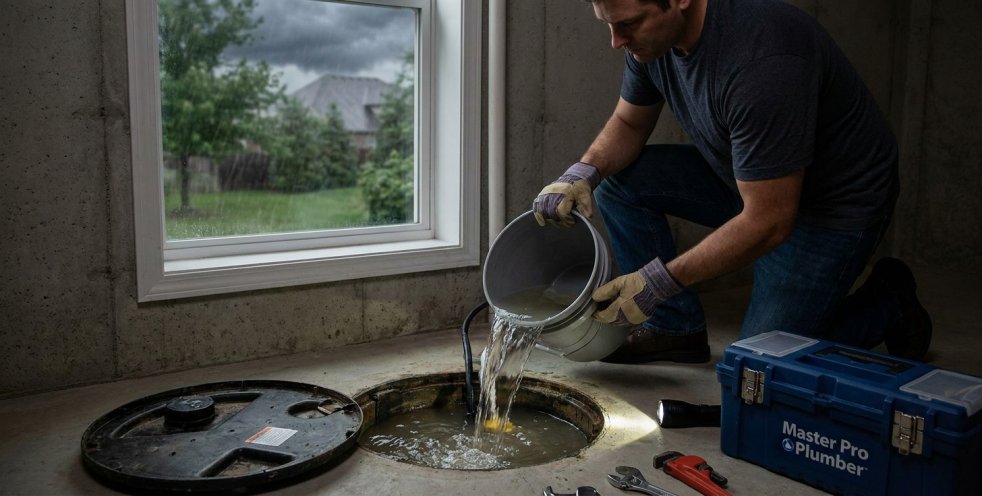
- Slowly pour a bucket of water into the pit until the float rises and triggers the pump.
- Watch to confirm the pump activates, moves the water out, and shuts off cleanly once the pit empties.
- Go outside and confirm water is discharging from the outlet pipe at least 10 feet from your foundation.
If the pump does not turn on, runs but does not clear the water, or makes unusual noises, stop and call a plumber. Do not assume it will hold up under real storm conditions.
The Role of Your Backup Sump Pump
A primary sump pump is only as reliable as the power supply feeding it. During severe storms in the Chicago area, power outages are common, sometimes lasting several hours.
A battery backup sump pump or a water-powered backup system gives you a second line of defense when the primary pump loses power or fails under heavy load. If your home does not have a backup system, storm season is the right time to consider adding one.
What Can Go Wrong If You Skip the Test
Skipping pre-season testing is a gamble that rarely pays off in a region like northeastern Illinois. The consequences of a failed sump pump during a storm can include the following.
- Several inches of standing water in a finished or unfinished basement
- Damage to flooring, drywall, furniture, appliances, and stored belongings
- Mold growth that begins within 24 to 48 hours of water intrusion
- Foundation damage from prolonged hydrostatic pressure
- Costly water damage restoration that insurance may not fully cover
The average cost of basement water damage restoration runs into the thousands. A sump pump inspection costs a fraction of that.
When to Call a Professional Plumber
Some sump pump issues are easy to spot but not easy to fix safely on your own. Call a licensed plumber if you encounter any of the following situations.
- The pump fails the bucket test and does not respond
- You find water in the pit but the float switch never triggered
- The discharge line is damaged, frozen, or improperly routed
- The pump is more than 10 years old and showing signs of wear
- You want a backup system installed before storm season begins
A professional can also inspect the check valve on the discharge line, clean debris from the pit, and confirm the pump is sized correctly for your home's drainage needs.
Schedule Your Sump Pump Inspection Today
Master Pro Plumber helps homeowners throughout Des Plaines and the surrounding communities keep their sump pumps in reliable working condition before storm season hits. We inspect, test, repair, and replace sump pump systems and can advise you on backup options that fit your home and budget.
Do not wait until the next heavy rain to find out your pump is not up to the job. Call (847) 641-2542 to schedule an inspection and go into storm season with confidence.