Why Sump Pump Inspections Are Important Before Storm Season
Spring and summer storm seasons in the Chicago area are no joke. Des Plaines and the surrounding Cook County communities regularly deal with heavy rainfall, flash flooding, and saturated ground that puts serious pressure on residential drainage systems. If your sump pump fails during a major storm, the result can be a flooded basement and thousands of dollars in damage.
A pre-season inspection is one of the simplest and most cost-effective things you can do to protect your home. Here is what you need to know.
Why Des Plaines Homeowners Need to Take Sump Pumps Seriously
The Des Plaines River corridor and the flat terrain throughout Cook County create conditions where stormwater has nowhere to go fast. Basements in this region are especially vulnerable during the spring thaw and the heavy rain events that hit between April and September.
Many homes in Des Plaines were built with basements that sit at or below the water table during wet seasons. A working sump pump is not optional in these homes. It is the primary line of defense against water intrusion.
What a Sump Pump Inspection Covers
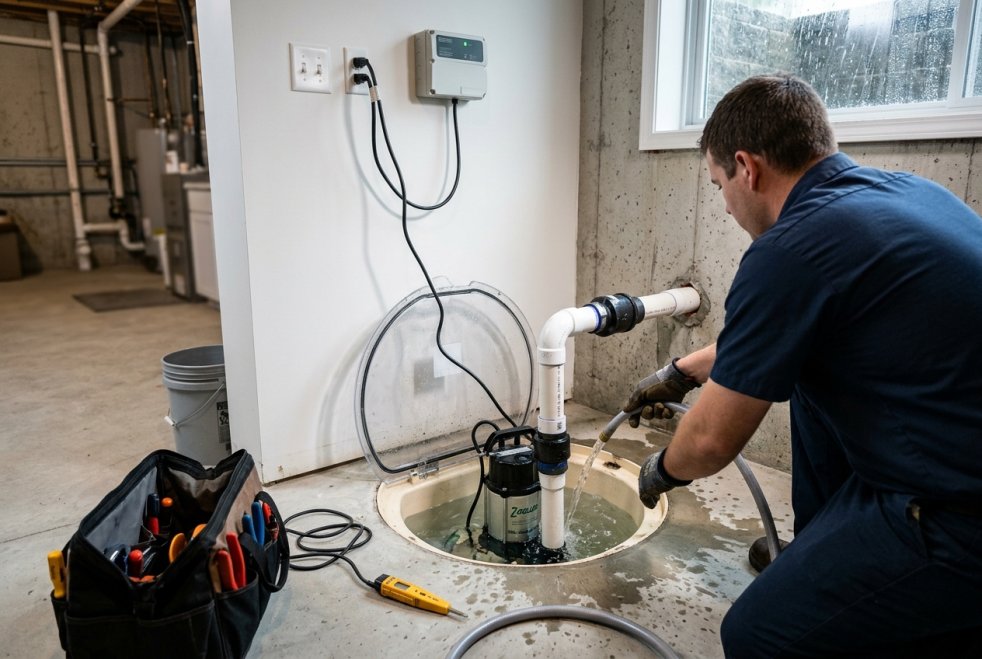
A professional inspection goes well beyond switching the unit on and calling it good. A licensed plumber will evaluate the entire system to confirm it can handle real storm conditions.
- Check the pump motor and float switch for proper operation
- Test the discharge line for blockages or freezing damage from winter
- Inspect the sump pit for debris, sediment buildup, or cracks
- Verify the check valve is functioning correctly
- Assess whether the pump capacity is adequate for your home and lot
- Evaluate the condition of the backup power source, if one is installed
Many pump failures happen because a small issue went undetected for months. An inspection catches those problems before the first big storm of the season.
Warning Signs Your Sump Pump Is Due for Service
Your sump pump will often give you signals that something is wrong before it fails completely. Do not ignore these.
- The pump runs constantly, even during dry weather
- You hear grinding, rattling, or unusual motor sounds during operation
- The pump cycles on and off rapidly without clearing the pit
- There is visible rust, corrosion, or standing water around the unit
- The pit fills with water, but the pump does not activate
- You notice a musty smell or moisture on the basement walls
Any one of these signs is a reason to schedule a service call before storm season begins, not after your basement takes on water.
The Risks of Skipping a Pre-Season Inspection
A sump pump that looks fine sitting in a dry pit may fail the moment it is actually needed. Pumps that sit idle through winter can develop seized motors, corroded float switches, and clogged discharge lines without showing any obvious signs.
The consequences of a pump failure during a storm event can include:
- Basement flooding and water damage to flooring, walls, and belongings
- Mold and mildew growth that develops within 24 to 48 hours of a moisture event
- Damage to HVAC equipment, water heaters, and electrical systems located in the basement
- Foundation issues from repeated water exposure over multiple seasons
- Costly emergency service calls during peak storm periods, when demand is highest
Scheduling an inspection in early spring, before the heavy rain season hits, keeps you ahead of the problem and gives you time to address any issues on your schedule.
When Repair or Replacement Makes More Sense Than Inspection Alone
Most sump pumps have a service life of seven to ten years under normal conditions. If your unit is approaching that age, an inspection may reveal that repair costs are not worth it compared to a straightforward replacement.
Situations where replacement is often the smarter call:
- The pump is more than eight years old and is showing performance issues
- It has already required multiple repairs in recent seasons
- The pump capacity is undersized for your home's water management needs
- You do not have a battery backup system and want to add one
A newer, properly sized pump with a battery backup gives you reliable protection even during power outages, which are common during the same storms that stress your drainage system the most.
What to Do Before the Storms Arrive
There are a few things you can do on your own to stay informed between professional service visits.
- Pour a bucket of water into the sump pit to confirm that the float switch activates the pump
- Check that the discharge line outlet is clear and draining away from the foundation
- Make sure the pump is plugged into a working GFCI outlet
- Test your battery backup unit if you have one installed
These quick checks take a few minutes and can alert you to obvious problems. However, they are not a substitute for a full professional inspection of the motor, valves, and pit condition.
Schedule Your Inspection With Master Pro Plumber
Master Pro Plumber provides sump pump inspections, repairs, and installations for homeowners throughout Des Plaines and the surrounding communities. The team understands the drainage challenges specific to this area and can assess your system honestly, recommend the right solution, and get the work done before storm season puts your basement at risk.
Do not wait until you are standing in a flooded basement to find out your pump was not up to the job. Call (847) 641-2542 to schedule a sump pump inspection and get your home ready for whatever this storm season brings.