
Signs Your Well Pump May Need Repair
If your home or property in Des Plaines relies on a private well, the well pump is one of the most critical components in your entire plumbing system. When it starts to fail, the warning signs are not always obvious at first. Knowing what to look for can save you from a complete loss of water supply, especially during the cold Illinois winters when well systems face added stress.
How a Well Pump Works
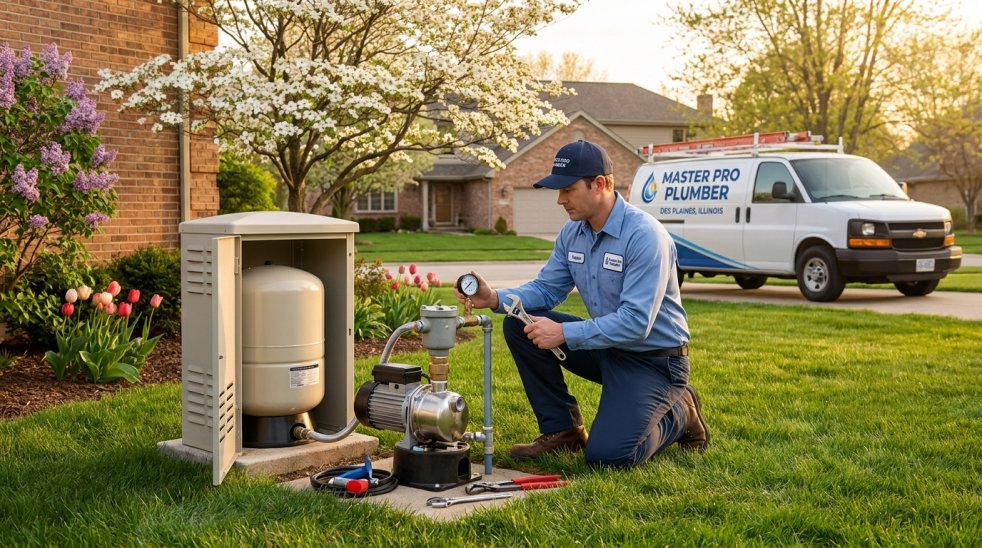
Most residential well systems use a submersible pump installed deep inside the well casing. The pump pushes water up through a pipe and into a pressure tank inside your home, which then delivers water to your fixtures at a consistent pressure.
When any part of this system starts to wear out, including the pump motor, pressure switch, or tank itself, you will usually notice changes in how your water behaves before the system fails completely.
Warning Signs Your Well Pump May Be Failing
These are the most common indicators that something is wrong with your well pump or the system connected to it:
- No water coming from faucets or fixtures despite the pump running
- Low or inconsistent water pressure throughout the home
- Sputtering or air coming from faucets when you turn them on
- Water pressure that surges and drops repeatedly
- The pump runs constantly without cycling off
- Unusual clicking or humming sounds near the pressure tank or electrical panel
- Discolored or sandy water coming from your taps
- A sudden spike in your electricity bill with no other explanation
Any one of these signs is worth taking seriously. A pump that runs non-stop is a common red flag, since it often means the pressure tank has lost its charge and the pump is working overtime to compensate.
Regional Factors That Affect Well Pumps in Des Plaines
The Des Plaines area sits in northeastern Illinois, where winter temperatures regularly drop below freezing from November through March. This creates specific risks for well systems that homeowners in warmer climates never have to consider.
Shallow well components, exposed piping near the wellhead, and pressure tanks in unheated spaces can all be vulnerable to freezing. A frozen line can mimic pump failure symptoms and, if left unaddressed, can cause real damage to the pump or connected pipes.
Illinois groundwater can also carry sediment and minerals that gradually wear down pump components over time. If you notice sand or grit in your water, the pump intake screen may be damaged, or the pump may be drawing from a lower water table than it was designed for.
Common Causes of Well Pump Problems
Understanding what causes pump failures helps you address the right problem and avoid repeat repairs:
- Age: Most submersible well pumps last 10 to 15 years. Older units are simply more prone to motor failure.
- Waterlogged pressure tank: When the air bladder inside the tank fails, the pump short-cycles and wears out prematurely.
- Electrical issues: A faulty pressure switch, corroded wiring, or a tripped breaker can prevent the pump from operating correctly.
- Sediment buildup: Sand and debris can clog the pump intake and reduce flow over time.
- Low well yield: During dry periods or after heavy demand, the water table can drop, and the pump may run dry.
- Freeze damage: Pipes or components near the wellhead that were not properly insulated can crack during a hard freeze.
Risks of Ignoring the Warning Signs
A struggling well pump does not fix itself. If you ignore the early symptoms, a minor issue like a failing pressure switch or a waterlogged tank can turn into a complete pump failure that leaves your home without water.
Replacing a submersible pump is significantly more involved and expensive than catching a pressure tank problem early. Running a pump dry or allowing it to short-cycle for weeks will shorten its lifespan considerably. The sooner you have the system inspected, the more options you have.
What to Do If You Suspect a Problem
If you are noticing any of the warning signs listed above, take these steps before the situation gets worse:
- Check your electrical panel to see if the breaker for the well pump has tripped
- Listen near the pressure tank for rapid clicking, which indicates short-cycling
- Check the pressure gauge on your tank. A reading that stays near zero or fluctuates rapidly points to a tank or pump issue.
- Avoid running large amounts of water until the system has been inspected, to prevent running the pump dry
- Call a licensed plumber who has experience with well systems
Do not attempt to pull a submersible pump yourself. It requires specialized equipment, and working around the electrical components of a well system without proper training is a serious safety risk.
How Master Pro Plumber Can Help
Master Pro Plumber has experience diagnosing and repairing well pump systems for homeowners and businesses throughout Des Plaines and the surrounding communities. We can assess your pump, pressure tank, and related components to find the root cause of the problem and give you a clear, honest recommendation.
Whether you need a pressure tank replacement, a pump motor repair, or a full system evaluation before winter sets in, we are ready to help. Call (847) 641-2542 to schedule a well pump inspection or get an estimate. Catching the problem early is always the smarter and more affordable path.