
How to Troubleshoot Low Water Pressure in Your Chicagoland Home
A steady trickle from the showerhead or a kitchen faucet that takes forever to fill a pot is one of the most common plumbing complaints Master Pro Plumber hears from homeowners across Chicagoland. Sometimes the fix is as simple as cleaning a clogged aerator. Other times it points to a bigger issue hiding inside the walls or under the street. Here is how to work through the problem methodically before you call in a professional.
Why Is My Water Pressure Suddenly Low
Sudden low water pressure is usually caused by a closed or partially closed shutoff valve, a failing pressure regulator, a clogged aerator or showerhead, a hidden leak, or corrosion inside old galvanized pipes, and pinpointing which one applies to your home starts with figuring out whether the problem affects one fixture or the entire house.
If the drop happened overnight, check whether any work was recently done on your plumbing or if the city performed water main maintenance nearby. Chicago area water departments routinely flush hydrants and repair mains, and that activity can stir up sediment or temporarily change pressure in nearby homes.
Common Causes Behind the Pressure Drop
Before grabbing a wrench, it helps to understand what's typically behind reduced flow in homes built throughout this region, many of which date back 60, 80, or even 100 years.
Galvanized Pipe Corrosion: Homes built before the 1960s in Chicago and the surrounding suburbs often still have galvanized steel supply lines. Mineral deposits and rust build up on the interior walls of these pipes over decades, narrowing the passage the way plaque narrows an artery. This is one of the single biggest culprits behind gradually worsening pressure in older bungalows and two-flats.
Pressure Regulator Failure: Most homes on municipal water have a pressure-reducing valve near the main shutoff. When this valve wears out, it can either restrict flow too much or let pressure swing unpredictably. These valves typically last 10 to 15 years before they need replacement.
Partially Closed Shutoff Valve: After any plumbing repair, remodeling project, or meter replacement, a valve that wasn't fully reopened can quietly starve your whole system.
Clogged Fixtures: Chicagoland's water carries more mineral content than some regions, and buildup inside aerators, showerheads, and cartridge valves is one of the easiest problems to fix yourself.
Hidden Leaks: A leak in a slab, wall, or yard line diverts water before it reaches your fixtures, and it often shows up as low pressure paired with an unexplained jump in your water bill.
How Do I Know If It's a Whole-House or Single-Fixture Problem
Answer this by testing at least three fixtures on different floors and using different supply lines. If only one fixture is affected, the clog or failure is local. If every fixture is weak, the cause is upstream at the meter, main line, or regulator.
Start with a bathroom sink upstairs, a kitchen faucet on the main level, and an outdoor spigot or basement laundry connection if you have one. Turn each on fully and pay attention to whether the water sputters, runs at a fraction of normal flow, or comes out clear but slow. This simple comparison narrows your search area before you spend money on repairs that won't solve the actual problem.
A Step-by-Step Way to Narrow Down the Problem
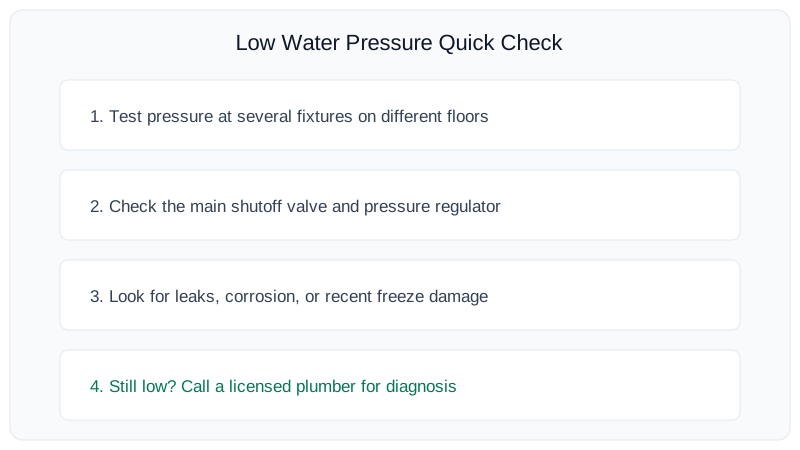
Working through the same sequence a licensed plumber would use can save you a service call, or at least help you describe the issue accurately when you do call one.
- Check your water meter and main shutoff valve to confirm it is fully open, since a valve that's even a quarter turn closed can cut pressure noticeably.
- Remove and inspect the aerator on the affected faucet, soaking it in vinegar overnight to dissolve mineral buildup before reinstalling it.
- Test hot and cold water separately, because pressure that's low only on the hot side usually points to a failing shutoff valve at the water heater or sediment inside the tank.
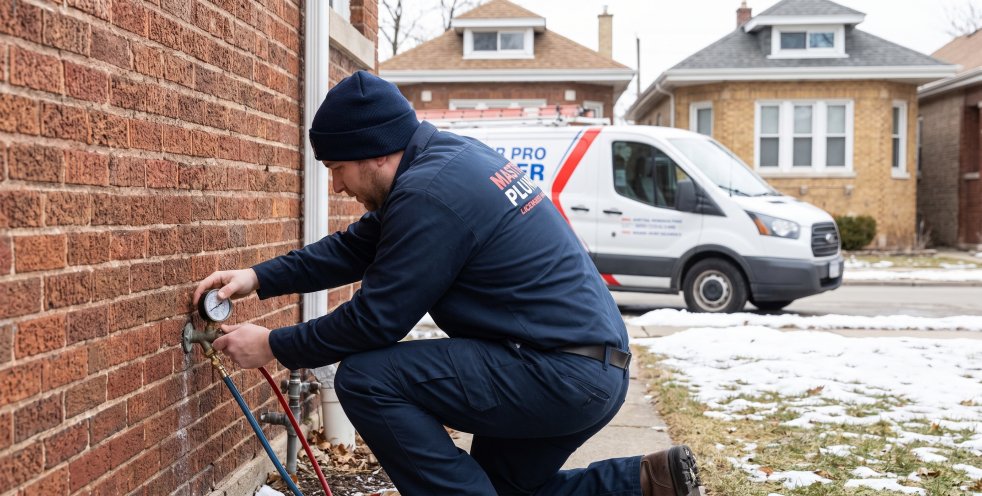
- Locate your pressure-reducing valve, typically found near the main shutoff, and check for a gauge reading. Healthy residential pressure sits between 45 and 60 psi.
- Walk your property for signs of a leak, including soft or unusually green patches of lawn, damp basement walls, or the sound of running water when everything is off.
- If pressure is still low after these checks, the cause is likely inside your pipe walls or the service line, and that calls for a professional inspection.
How Chicagoland's Climate Plays a Role
Winter is hard on plumbing systems throughout the region, and low water pressure often shows up as a delayed side effect of a hard freeze weeks earlier. When temperatures drop into single digits, exposed or poorly insulated pipes in crawl spaces, exterior walls, and unheated garages can develop small cracks that go unnoticed until spring thaw, when they start leaking and pulling pressure away from the rest of the house.
Frost lines in this region typically reach 36 to 42 inches deep, which is why water service lines are required to be buried below that depth. Older homes where the line was installed at a shallower depth, or where the ground has shifted over the years, are more prone to partial freezing that restricts flow without a full burst. If your pressure dropped during or right after a cold snap and hasn't recovered, a partially frozen or damaged line is worth ruling out quickly.
How Much Does It Cost to Fix Low Water Pressure
Fixing low water pressure can cost anywhere from under $20 for a new aerator to $3,000 or more for replacing a corroded main water line, with most common repairs falling in the $150 to $800 range depending on what's actually causing the restriction.
Aerator or Showerhead Cleaning: Usually free if you do it yourself, or around $75 to $125 for a service call if a plumber handles multiple fixtures during a maintenance visit.
Pressure Regulator Replacement: Typically runs $250 to $500 including parts and labor, and is one of the more cost-effective fixes when the whole house is affected.
Shutoff Valve Replacement: Generally falls between $150 and $400 depending on accessibility and whether the old valve has corroded in place.
Repiping Galvanized Sections: Costs vary widely based on how much of the home needs new lines, but partial re-pipes often range from $1,500 to $5,000, while a full home repipe can run higher.
Water Service Line Repair or Replacement: Because these lines run under the yard, sidewalk, or driveway, repairs often fall between $2,000 and $6,000, with cost driven by depth, length, and whether trenchless methods can be used.
When You Need a Licensed Plumber, Not a Quick Fix
Some low-pressure problems are genuinely simple, but others are early warning signs of a bigger failure waiting to happen. If you've cleaned every aerator, confirmed the shutoff valve is fully open, and pressure is still weak throughout the house, the issue is almost certainly inside the walls or underground where DIY troubleshooting stops being practical.
Master Pro Plumber carries pressure gauges, camera inspection equipment, and the experience to tell the difference between a five-minute fix and a repair that needs a permit from your local municipality. Illinois plumbing code requires licensed contractors for water service line work and most interior repiping, which protects you from liability and ensures the repair holds up to inspection.
Call (847) 641-2542 to schedule a diagnostic visit, and get a clear answer on what's causing your low water pressure and what it will take to fix it for good.
Frequently Asked Questions
Can low water pressure damage my appliances?
Yes, extremely low pressure can prevent dishwashers and washing machines from filling and draining correctly, while pressure that's too high, often from a failing regulator, puts extra strain on supply lines and can shorten the lifespan of water heaters and fixtures.
Is low water pressure covered by homeowners insurance?
The pressure issue itself typically isn't covered, but resulting damage from a burst pipe or hidden leak often is, so it's worth documenting the problem and any related water damage in case you need to file a claim.
How long does a typical pressure diagnostic visit take?
Most diagnostic visits take 60 to 90 minutes, though homes with suspected underground leaks or older galvanized piping may need additional time for camera inspection or pressure testing at multiple points in the system.