How to Prevent Basement Flooding During Spring Rains
Spring weather in Cook County can be unpredictable. Heavy rain, melting snow, and rapid temperature swings often combine to create ideal conditions for basement flooding. For homeowners, understanding how and why flooding happens is the first step toward prevention.
This guide covers the causes, warning signs, risks, and practical steps you can take to protect your home.
Why Basement Flooding Is Common in Cook County
Cook County’s climate and infrastructure play a major role in basement water issues. Homes in this region are especially vulnerable during spring due to:
- Frequent heavy rainstorms that saturate the soil
- Snowmelt increases groundwater levels
- Clay-rich soil that drains slowly
- Older sewer systems that can back up under pressure
- Freeze-thaw cycles that weaken pipes and foundations
These factors often combine, creating conditions where water has nowhere to go except into your basement.
Common Causes of Basement Flooding
Flooding typically results from one or more of the following plumbing and drainage issues:
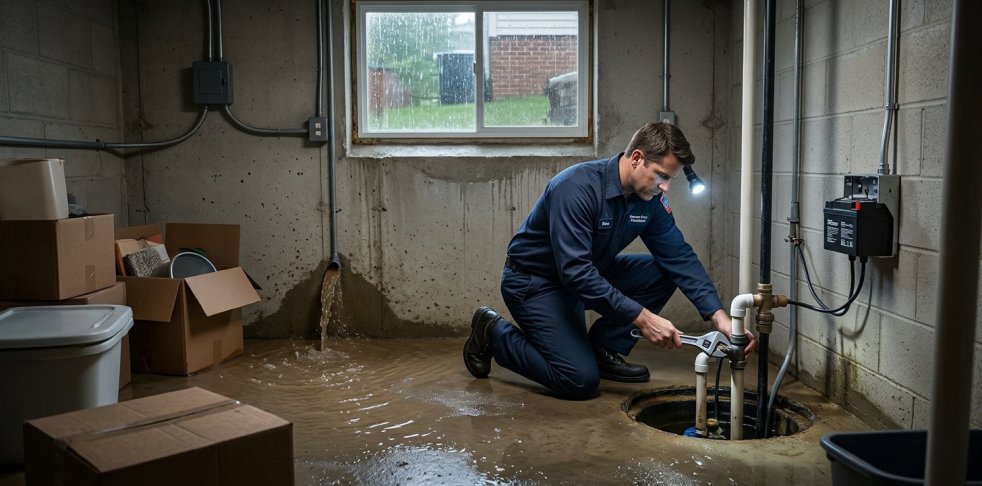
- Sump pump failure or overload during storms
- Clogged or collapsed drain lines
- Sewer backups during heavy rainfall
- Foundation cracks allowing water intrusion
- Poor exterior drainage or grading
- Burst pipes caused by temperature fluctuations
A licensed plumber can identify whether the issue is inside your home, outside, or a combination of both.
Early Warning Signs to Watch For
Basement flooding rarely happens without warning. Catching these signs early can help you avoid major damage:
- Musty odors or persistent dampness
- Water stains on walls or floors
- Cracks in the basement walls or floors
- Slow drains or gurgling sounds in pipes
- Sump pump cycling too often or not activating
- Visible corrosion or small leaks in pipes
If you notice any of these issues, it’s a good time to have your system inspected before the next storm.
Risks of Basement Flooding
Ignoring water issues can lead to more than just a wet basement. The risks can escalate quickly:
- Structural damage to your foundation
- Mold and mildew growth within 24 to 48 hours
- Damage to flooring, drywall, and stored belongings
- Electrical hazards in flooded areas
- Increased likelihood of emergency plumbing situations
- Higher risk of burst pipes due to pressure changes
Addressing problems early helps reduce repair costs and protects your home’s value.
How to Prevent Basement Flooding
Taking proactive steps can significantly reduce your risk. Focus on both plumbing and exterior drainage.
Maintain Your Sump Pump
Your sump pump is your primary defense against flooding.
- Test it regularly before spring storms
- Clear debris from the pit
- Install a battery backup in case of power outages
- Replace aging units before they fail
Improve Exterior Drainage
Keeping water away from your foundation is critical.
- Clean gutters and downspouts
- Extend downspouts at least 5 to 6 feet from your home
- Ensure your yard slopes away from the foundation
- Address areas where water pools after rain
Seal Foundation Openings
Even small entry points can allow water inside.
- Seal minor cracks with waterproof materials
- Have larger structural cracks evaluated professionally
Prevent Sewer Backups
Cook County’s sewer systems can become overwhelmed during heavy rain.
- Install a backwater valve
- Avoid putting grease or debris down drains
- Schedule periodic drain inspections
Protect Your Pipes
Spring temperature swings can still affect plumbing.
- Insulate exposed pipes
- Monitor for leaks or pressure changes
- Address small issues before they turn into burst pipes
When to Call a Plumber
Some situations require immediate professional attention. Contact a plumber if you experience:
- Active water intrusion into your basement
- Sump pump failure during rainfall
- Sewage backups or strong odors
- Frozen or burst pipes
- Recurring drainage or flooding issues
Prompt service can prevent further damage and reduce the need for extensive repairs.
What to Do If Flooding Starts
If your basement begins to take on water, act quickly and safely:
- Shut off electricity to affected areas if it is safe
- Avoid standing water, especially if contamination is possible
- Identify and stop the water source if possible
- Contact emergency plumbing services
- Begin drying and ventilating the space once conditions are safe
Quick action can limit both structural damage and cleanup costs.
Staying Prepared for Spring Weather
Basement flooding in Cook County is a common issue, but it is often preventable with proper maintenance and planning. Regular inspections, reliable equipment, and attention to early warning signs can help you avoid costly emergencies.
If you want a professional evaluation of your home’s plumbing system before the next storm, contact Master Pro Plumber at (847) 641-2542.