

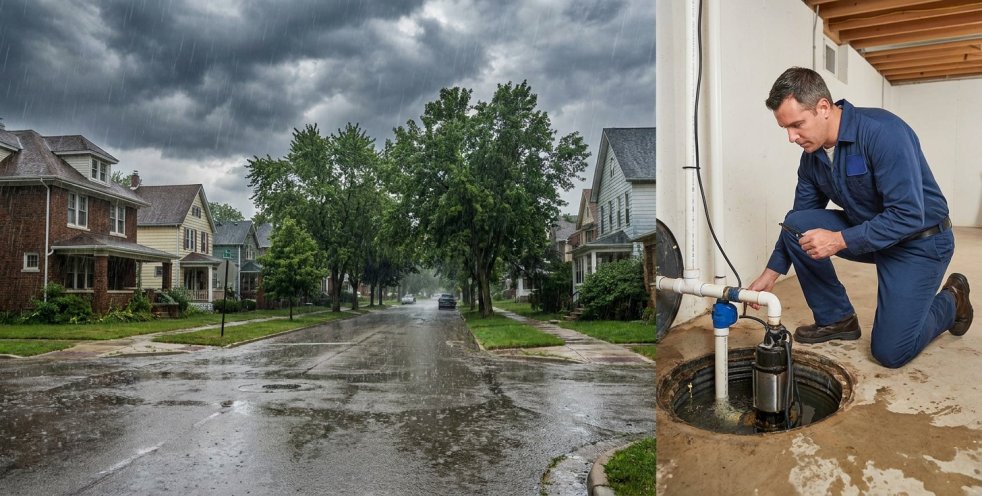
How Heavy Summer Storms Can Impact Your Plumbing System in Des Plaines
Summer in the Chicago area brings more than heat and humidity. Des Plaines sits in a region where intense thunderstorms, flash flooding, and heavy rainfall are a regular part of the season. Most homeowners think about roof damage or flooded basements when a storm rolls through, but your plumbing system takes a hit too.
Understanding how storms affect your pipes, drains, and sewer lines can help you catch problems early and avoid expensive repairs down the road.
Why Summer Storms Are Hard on Plumbing in Des Plaines
Des Plaines sits in the Des Plaines River valley, an area historically prone to flooding. The city has invested in flood control infrastructure, but heavy rainfall still overwhelms storm and sanitary sewer systems during intense events. When that happens, the effects reach directly into your home.
Clay soil common throughout the Chicago suburbs also shifts and expands when saturated with water. That ground movement puts stress on underground pipes and sewer laterals that connect your home to the municipal main.
Sewer Backups: The Most Common Storm-Related Plumbing Problem
When heavy rain overwhelms the municipal sewer system, sewage and stormwater can reverse direction and push back through your drain lines. This is called a sewer backup, and it is one of the most unpleasant and costly plumbing emergencies a homeowner can face.
Basements are especially vulnerable because floor drains and laundry tub drains sit at the lowest point of the system. If your home does not have a backwater valve installed, there is nothing stopping that flow from entering your living space.
- Gurgling sounds from toilets or floor drains during or after heavy rain
- Slow drains throughout the home at the same time
- Sewage odor coming up from basement drains
- Water or sewage backing up into a tub, toilet, or floor drain
Any of these signs after a storm means you should stop using water in the home and call a plumber right away.
How Flooding Affects Underground Pipes
Saturated soil shifts, and that movement is not gentle on the pipes buried beneath your yard. Older clay or cast iron sewer laterals are particularly vulnerable to cracking and joint separation when the ground moves.
Tree roots are another factor. Des Plaines neighborhoods have mature tree canopies, and roots actively seek out moisture. A storm that saturates the soil drives root growth toward any small crack or joint in a nearby sewer line. Over time, that intrusion grows into a full blockage.
- Recurring slow drains that return after snaking
- Patches of unusually green or lush grass over the sewer line path
- Sinkholes or soft spots in the yard after storms
- Sewage smell in the yard near the lateral line
Sump Pump Overload and Failure
Most Des Plaines homes with basements rely on a sump pump to manage groundwater during heavy rain. A major storm can push more water into the sump pit than the pump is rated to handle, or the pump can fail entirely from running continuously for hours.
A failed sump pump during a storm can mean several inches of water in your basement within a short period. That water puts pressure on floor drains, can damage water heaters and HVAC equipment, and creates conditions for mold growth within 24 to 48 hours.
- Test your sump pump before storm season by pouring water into the pit
- Consider a battery backup pump for use during power outages, which often accompany severe storms
- Check the discharge line to make sure it drains well away from the foundation
Water Pressure Fluctuations and Pipe Stress
Heavy storms can cause temporary pressure fluctuations in the municipal water supply as the system responds to surges in demand and infrastructure stress. Those pressure swings travel into your home's supply lines and put added stress on older pipes, fittings, and appliances.
Homes with galvanized steel or older copper pipes are more susceptible. A pressure spike can push a weakened joint or fitting past its limit, resulting in a slow leak inside a wall that may not be visible for days or weeks.
What to Do After a Heavy Storm
Once a storm passes, take a few minutes to check your plumbing before assuming everything is fine.
- Run water at several fixtures and watch for slow drainage or unusual sounds
- Check the basement floor drain and sump pit for signs of backup or overflow
- Look under sinks and around the water heater for new moisture or drips
- Walk the yard and look for soft spots, pooling water, or odors near the sewer lateral path
- Check your water meter with all fixtures off. If the dial is still moving, you may have a leak.
Catching a problem within the first day or two after a storm is almost always less expensive than discovering it weeks later when damage has spread.
Protect Your Home Before the Next Storm
The best time to address storm-related plumbing vulnerabilities is before a storm hits. A backwater valve installation, a sump pump upgrade, or a sewer camera inspection can prevent a major emergency during the next heavy rain event.
Master Pro Plumber serves homeowners and businesses throughout Des Plaines and the surrounding communities. Our team understands the local drainage challenges, aging infrastructure, and soil conditions that make summer storms especially tough on area plumbing systems.
Call (847) 641-2542 to schedule an inspection or talk through your options. A little preparation now can save you from a serious headache the next time the sky opens up.